How to explain Ramadan and Eid to young children
Published 21 November 2026 · Sunny Scribbles Kids
Ramadan is full of things little ones can see, hear and taste: a thin crescent moon, lanterns in the window, a plate of dates at sunset, and the excitement of Eid morning. Those moments are the easiest place to start. This guide gives you simple words for the big ideas, so you can talk about Ramadan and Eid in a way that feels right for your child’s age.
What is Ramadan?
Ramadan is the ninth month of the Islamic calendar, and a special time for Muslims all over the world. It is a month for prayer, for being thankful, for kindness and for spending time with family and friends.
For a young child, you might say: “Ramadan is a special month when our family tries extra hard to be kind, to say thank you to Allah, and to help other people.”
Why does the moon matter?
The Islamic calendar follows the moon. Ramadan begins when the new crescent moon is seen in the sky, and it lasts for 29 or 30 days, until the next new moon is seen. Because the moon’s year is shorter than the sun’s, Ramadan starts about 10 to 11 days earlier each year.
Moon-watching is a lovely way in for little ones. Look for the crescent together on the first evening, and notice how the moon changes shape through the month.
What does fasting mean?
During Ramadan, grown-ups who are able to fast don’t eat or drink from dawn until sunset. Fasting is a way of remembering Allah, practising patience and thinking of people who don’t have enough to eat.
Young children don’t need to fast. People who are unwell, very old, pregnant or travelling don’t have to fast either. Some families let older children try fasting for part of a day if they would like to, but this is always a family choice, and a child’s health comes first.
For a young child, you might say: “Grown-ups wait until the sun goes down to eat. It helps us remember to be grateful for our food, and to think about people who are hungry.”
Suhoor and iftar
Two meals shape each day of Ramadan:
- Suhoor is the meal eaten before dawn, while it is still dark outside.
- Iftar is the meal that breaks the fast at sunset. Many families start iftar with dates and water, then share a meal together.
Children who are too young to fast can still join in with iftar: setting the table, washing the fruit, or carrying the dates to the table.
Kindness and giving
Giving is at the heart of Ramadan. Families share food with neighbours, give to charity, and try to be extra patient and kind. Before the Eid prayer, Muslims give a small charity called zakat al-Fitr, so that everyone can enjoy Eid.
Little acts are perfect for little hands: choosing a toy to give away, drawing a card for a neighbour, or helping carry a plate of treats next door.
What is Eid al-Fitr?
Eid al-Fitr is the celebration at the end of Ramadan. It begins when the new moon of the next month is seen. On Eid morning, families often wear new or special clothes, go to the Eid prayer, visit relatives and friends, share food, and give children small gifts or money.
For a young child, you might say: “Eid is a happy celebration at the end of Ramadan, when we say thank you, see the people we love, and share a special day together.”
Words to know
- Ramadan Mubarak: “Blessed Ramadan”, a greeting for the start of the month. Some people say Ramadan Kareem, “generous Ramadan”.
- Suhoor: the meal before dawn.
- Iftar: the meal at sunset that breaks the fast.
- Eid Mubarak: “Blessed Eid”, the greeting for Eid.
Ideas for every age
Ages 2 to 4: keep it sensory and simple. Spot the moon, light a lantern, colour a crescent, and say “Eid Mubarak” to family. One sentence at a time is plenty.
Ages 4 to 6: add the “why”. Talk about kindness and thankfulness, count down the days together, and read a gentle Ramadan story at bedtime.
Ages 6 to 8: invite questions and small responsibilities. Children this age often enjoy helping to plan iftar, choosing where to give charity, or making Eid cards for the people they love.
For families and classrooms new to Ramadan
You don’t need to be Muslim to share Ramadan and Eid with children. Many children have friends, classmates and neighbours who celebrate, and learning about each other’s special days is a warm way to grow closer. Keep the focus on what children can see and do: the moon, the lanterns, sharing food and being kind.
Keep exploring
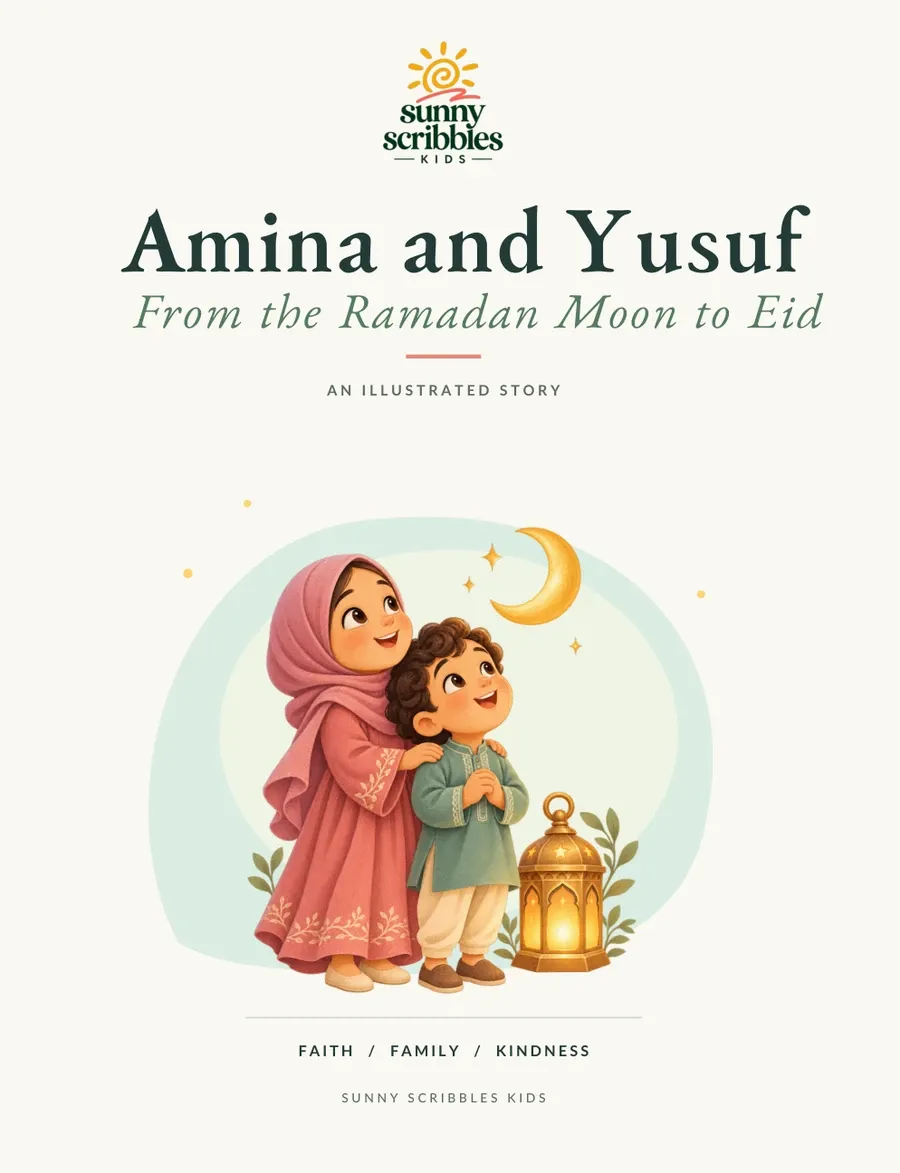
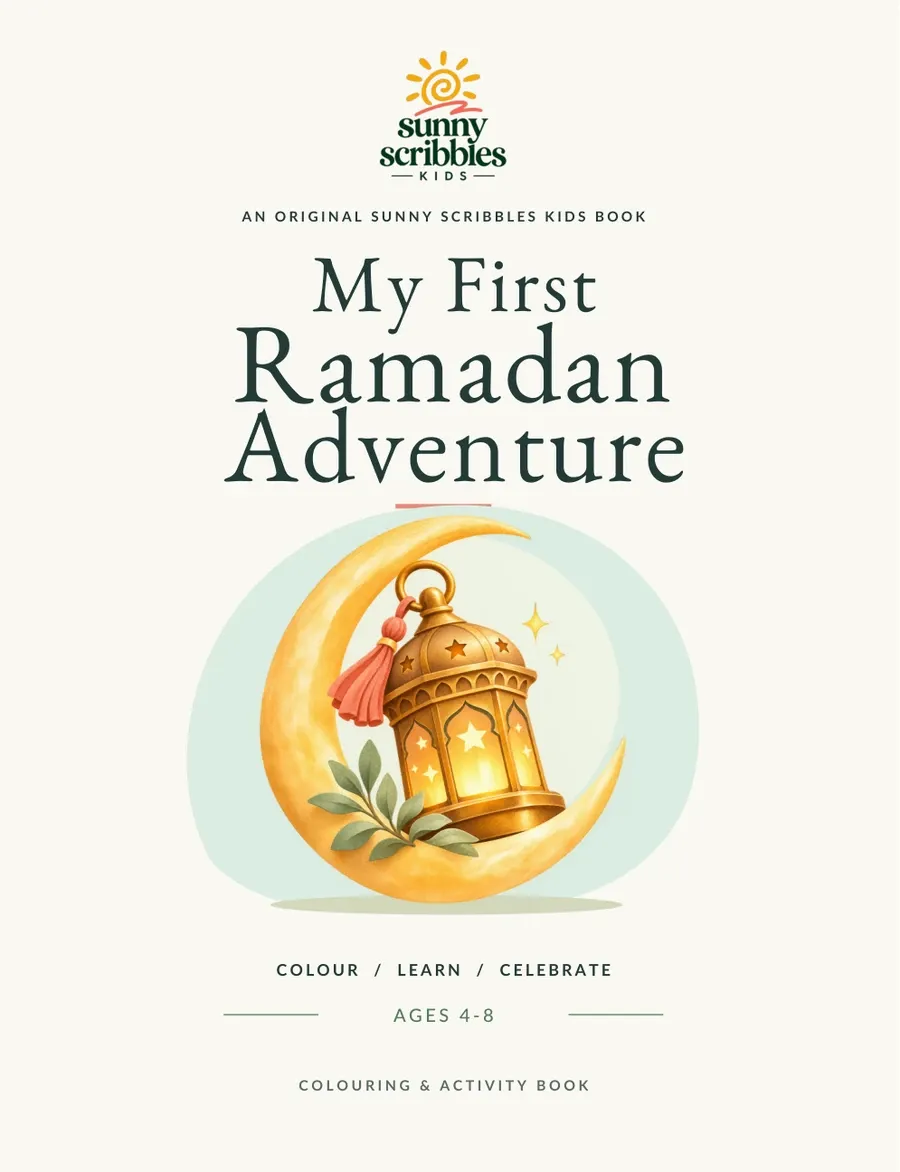
If your family enjoys stories, Amina and Yusuf: From the Ramadan Moon to Eid follows two siblings from the first crescent of Ramadan to Eid. For colouring and activities, My First Ramadan Adventure explores the month page by page, and you can colour our Eid Mubarak page online for free.